UK Engine Market 2026 — What Is Driving Replacement Engine Prices and How to Pay Less
October 15, 2026
Engine Prices in 2026: What Is Driving UK Replacement Engine Costs Up, and Six Ways to Lower Your Bill
What is driving the market in 2026
Three things are shaping the UK engine market: the age of the vehicle parc, which means more cars are reaching engine-repair mileage; the rising cost of Land Rover engine reconditioning labour and machining; and the scarcity of certain engine codes as donor vehicles are scrapped. Together, these pressures push up average replacement engine prices, while the top and bottom ends of the market remain roughly where they were.
Which routes are cheapest this year?
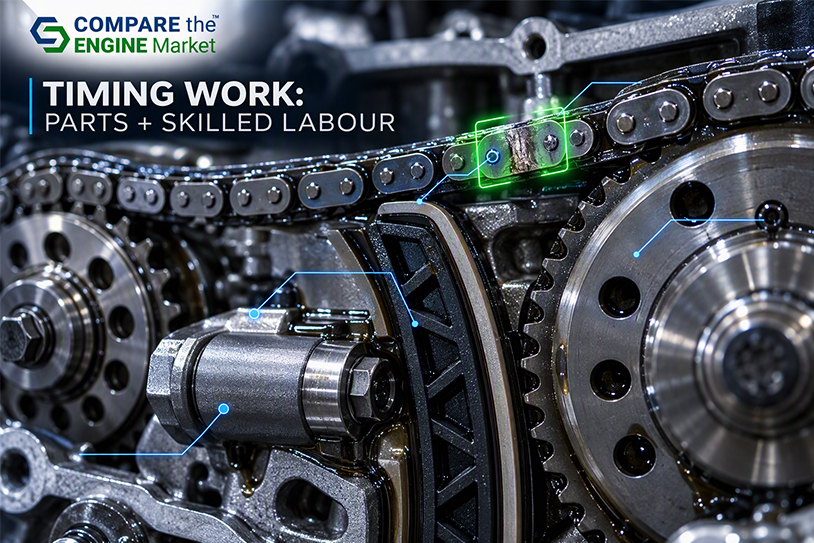
| Route | 2026 fitted range | Change from recent years |
| Used, tested | £1,300–£4,000 | Stable |
| Reconditioned | £2,400–£4,600 | Rising with labour |
| Rebuilt your own | £2,000–£5,500 | Rising with machining costs |
| Dealer new | £4,500–£9,000 | Rising |
| Dealer exchange | £5,500+ | Rising |
Six decisions that reduce your bill
- Confirm your engine code and shop for that exact specification.
- Choose the route that matches your ownership plans, not the biggest warranty you can afford.
- Ask for a short engine where your ancillaries test well.
- Supply the core exchange where the supplier offers credit.
- Combine consumables — timing components and water pumps in one visit.
- Compare three or four quotes with identical scope rather than one quote against a memory.
Why is timing work more expensive than it used to be?
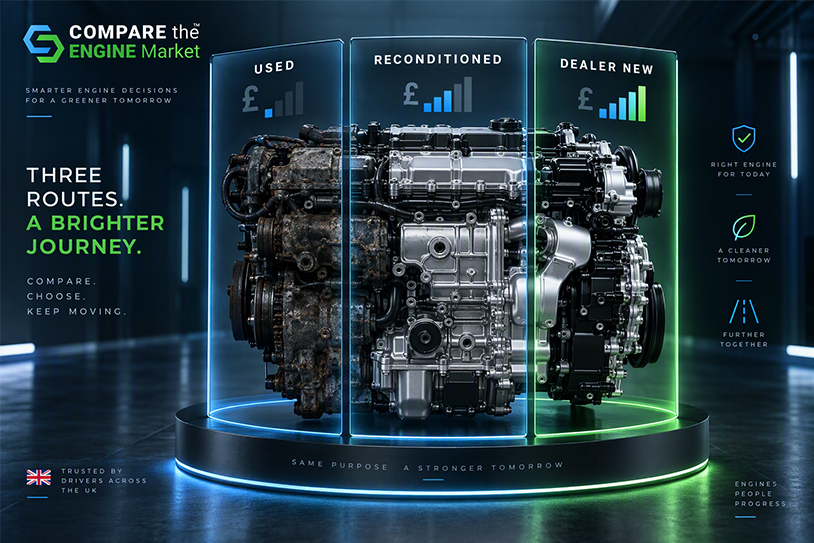
Timing chain replacement cost and timing belt work have risen because these jobs are labor-intensive, require clean working conditions on an engine that may need to come out, and depend on skilled technicians whose rates have increased. The components themselves are not always the main expense; the hours are. That is why quotes for timing chain and belt replacement have moved more than quotes for a straightforward used engine replacement.
What does the market look like by vehicle type?
| Vehicle type | Market position | Why |
| Small petrol hatchback | Lowest | Plentiful units, simple labour |
| Family diesel | Middle | More complex, moderate labour |
| Large SUV diesel | Upper middle | Heavy engines, significant labour |
| Commercial van | Upper middle | Duty cycle and downtime pressure |
| Performance and rare | Highest | Scarcity and specialist labour |
How do you tell whether a quote reflects the market?
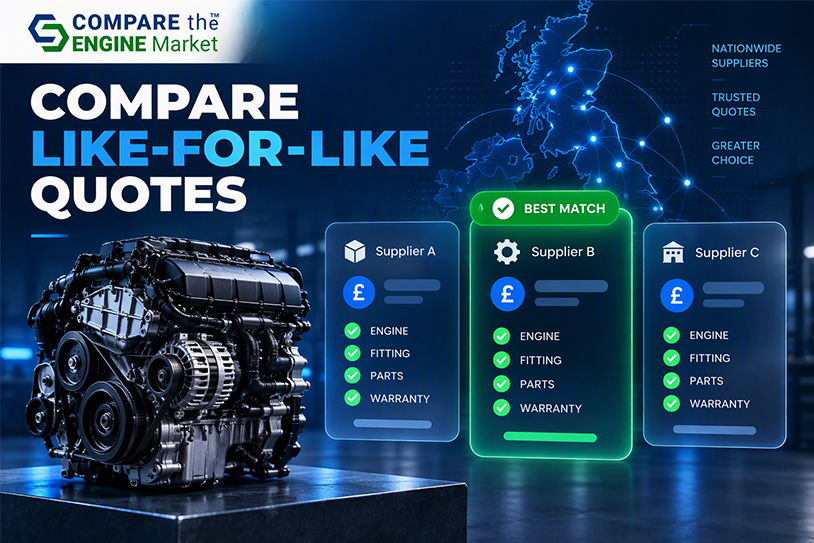
To judge whether an engine replacement quote reflects the market, compare it with three others for the same engine code and identical scope. Focus on the middle of the range rather than the extremes. A quote far above the middle needs explaining, while a quote far below it often means something has been left out. A reliable price comparison should include the unit, fitting, parts, consumables and warranty.
What should you do if your quote has risen since last year?
Ask the supplier to break it down: unit, parts, labour and consumables. Often the unit has not changed but the labour has, and knowing which part of the bill has moved tells you whether to negotiate, change route or wait. On engines it rarely pays to wait, because scarcity pushes prices up rather than down.
Frequently asked questions
Are engine prices going up in 2026?
Reconditioning and dealer routes are rising with labour and machining costs, while tested used engines remain comparatively stable.
Which route gives the best value now?
For a car you plan to keep, a reconditioned engine with fitting and warranty often offers the best long-term value. For a car being sold, a tested used engine with short cover may be the more cost-effective route.
Is it cheaper to rebuild my own engine?
Sometimes, particularly on matching-numbers cars and where the damage is contained. Compare a written engine rebuild cost with the price of a reconditioned replacement engine, including labour, machining, parts and warranty.
Can I reduce the price by supplying my own parts?
Occasionally, but you also take on the warranty for those parts. Most suppliers prefer to supply and guarantee their own components.
How much can I realistically save by shopping around?
Several hundred pounds on identical scope, and considerably more if you change route to match your ownership plans.
Which direction will the market move next?
Upward, slowly, on anything involving skilled labour, while tested used engine prices stay broadly flat because supply and demand are stable. The practical implication is simple: quotes for reconditioning and rebuild work should be used while they are current, because the labour element is the part that keeps moving.
What should you check before accepting a 2026 quote?
Before accepting a replacement engine quote, confirm the scope in writing, verify the engine code, ask what is included in the fitted price, and check the length and terms of the engine warranty. Quotes often remain valid for a limited period, so knowing that window helps you decide on your own timetable rather than being pushed by a supplier’s timescale.
Does the market differ by region?
Yes, because engine fitting costs in the UK vary with regional labour rates. The unit price for a specific engine is broadly national, but fitting charges are not. On a large job, comparing a local engine fitting specialist with one two counties away can produce a meaningful saving, although recovery costs must be weighed against it.
What does a rising market mean for owners of older cars?
That the arithmetic is shifting. As reconditioning costs rise, the gap between repairing and replacing a car narrows, and on older vehicles it can tip the decision towards selling rather than rebuilding. Checking the car's value against a current quote is now more important than it was two or three years ago, because the quote is moving upwards while the car's value is not.
How should you budget for an engine replacement in 2026?
Set aside the mid-range engine replacement cost for your code and chosen route rather than the cheapest figure you have seen. Add a contingency for consumables and any ancillaries discovered during the job. Owners who budget around the middle of the fitted engine price range are rarely surprised; owners who budget for the bottom of it usually are.
Which trend should owners watch most closely?
The cost of skilled labour, because it is the element moving fastest and it affects every route that involves reconditioning or rebuilding. Unit prices for used engines have been broadly stable, so the widening gap between used and reconditioned in some cases is a labour story rather than a parts story.
How should an owner use market information in practice?
Use market information to choose the right route before choosing a supplier. Once you know that a reconditioned engine fitted costs £2,400–£4,600 and a tested used engine fitted costs £1,300–£4,000, the question stops being “which is cheapest?” and becomes “which option suits how long I am keeping this car?” That is the decision a useful UK engine price comparison should support.
What should an owner take from all of this?
The key takeaway is that the UK replacement engine market is a range, not a single price. Your job sits somewhere inside it based on the engine code, the route you choose and what the quote includes. Owners who compare engine prices, warranties and fitted scope receive clearer quotes and make better decisions because they stop chasing one headline number and start comparing like-for-like products.
Written by Daniel Collins | Dedicated ET Automotive Writer & Mechanic