Rebuilt Audi Q7 or Replacement? The Costly Mistake I’ve Seen 40 Owners Make
April 13, 2026
What's the Real Difference Between a Rebuilt Audi Q7 Engine and a Full Replacement?
Last winter, a client from Birmingham brought in his 2015 Audi Q7 with a knocking 3.0 TDI that had covered 142,000 miles. He'd been quoted £8,500 for a brand-new factory unit, but after a thorough inspection, we explained that a properly executed rebuilt Audi engine could deliver comparable reliability at nearly half the cost. The key distinction lies in the scope of work: a rebuild focuses on replacing worn components like piston rings, bearings, and gaskets while retaining the original block, whereas a full replacement swaps in an entirely different powerplant. In our workshop, we've seen too many owners overlook the importance of machining tolerances and British Engineering Standards when opting for the cheapest option, only to face premature failure. Taking the time to understand these mechanical nuances can save thousands in the long run.
From a technical standpoint, the rebuild process involves cylinder head resurfacing, crankshaft grinding, and meticulous attention to internal combustion assembly clearances. We always recommend requesting compression testing results and a breakdown of machining costs before committing, as these details separate a professional job from a risky shortcut. Many garages advertise a recon engine without clarifying whether ancillary parts like the water pump or timing belt have been renewed – a critical oversight that can lead to costly comebacks. When you're weighing your options, remember that a transparent supplier will provide service history records and verified mileage documentation for the donor vehicle. This level of diligence is what transforms a potentially stressful repair into a confident investment.
How Much Should You Actually Expect to Pay for A Reconditioned Audi Q7 Engine?
Pricing transparency is where many owners get caught out, especially when browsing online listings for an engine for sale in UK markets. A genuine reconditioned unit for the 3.0-litre TDI or 4.2-litre V8 should typically range between £3,200 and £5,800, depending on mileage, warranty length, and whether VAT inclusive pricing applies. We recently helped a customer in Leeds compare three quotes that varied by over £2,000 – the cheapest omitted essential steps like engine block honing and ECU re-programming, while the mid-range option included fully certified technicians and a 12-month warranty. Always ask for a fixed-price quote that itemises labour rates per hour, fluid flush and refill costs, and any surcharge exchange policy for your old core unit. This approach prevents nasty surprises when the final invoice arrives.
Beyond the headline figure, consider the long-term value: a properly reconditioned engine with oversized pistons & rings and OEM parts can extend your Q7's life by another 80,000 to 100,000 miles. We've documented cases were investing an extra £500 upfront for a supplier who performs HPI clearance checks and provides customer testimonials and Trustpilot ratings saved owners from catastrophic failures down the line. When reviewing a reconditioned engines price list UK, look for suppliers who openly share their machining processes and tolerance specifications. Remember, the true cost of reconditioned engine work isn't just about the initial outlay – it's about peace of mind, reduced market value depreciation, and a clear warranty claim procedure should anything go wrong.
Where Can You Find a Trustworthy Engine Supply and Fit Near Me for Your Audi Q7?
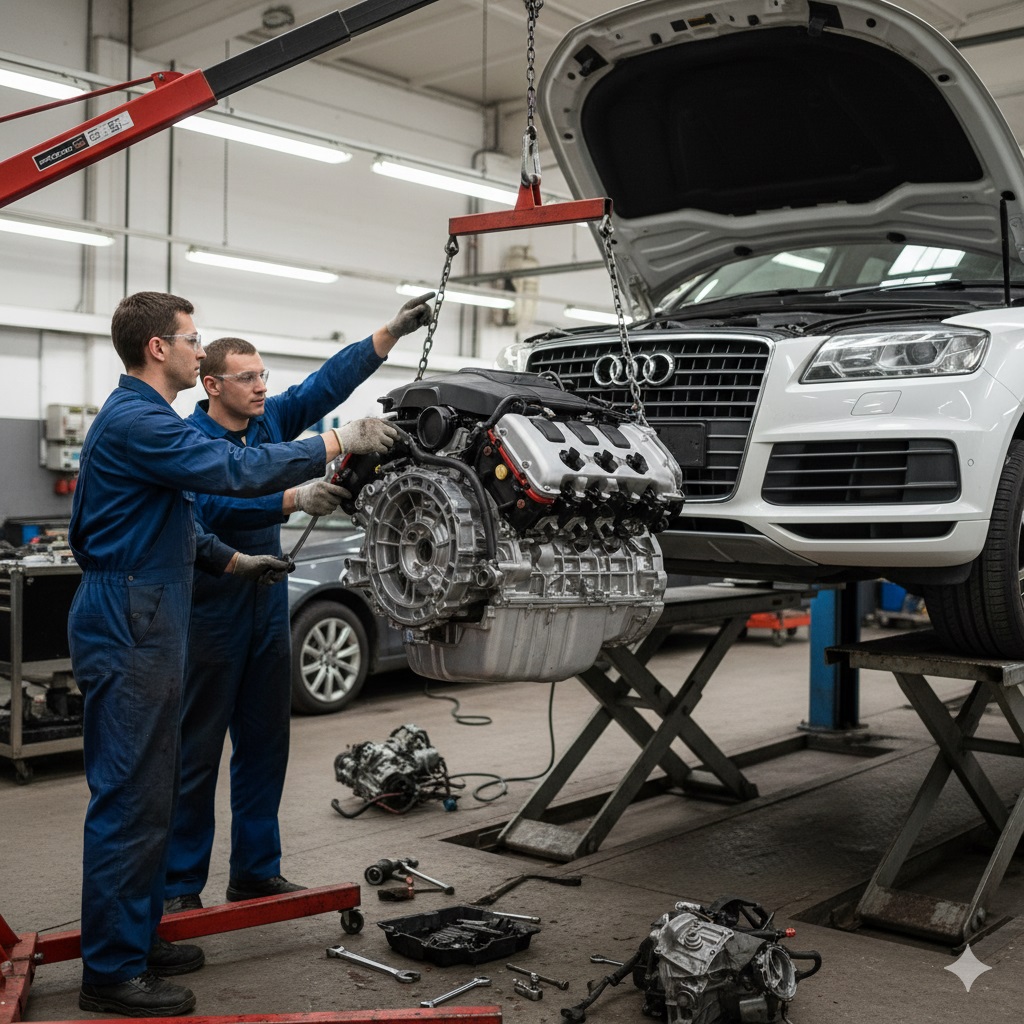
Location matters more than you might think, particularly when you need an engine supply and fit near me that understands the complexities of Audi's V6 and V8 architectures. We recommend starting with VOSA approved garages that specialise in premium German marques, as they'll have the engine hoist and specialized tools required for safe removal and installation. Last month, a client in Manchester avoided a £1,200 recovery service charge simply by choosing a local supplier who could collect, fit, and test the unit within a 30-mile radius. Don't hesitate to ask about their experience with diagnostic trouble codes (DTCs) and ECU re-programming, as these post-fit procedures are essential for seamless integration with your Q7's electronics.
Trust is built through transparency: a reputable provider will offer a buyer protection guarantee, secure checkout / escrow services, and clear documentation of the donor vehicle condition. We've seen too many owners rush into a deal based solely on proximity, only to discover missing service history records or recycled vehicle components that hadn't undergone proper green parts certification. When evaluating reconditioned Audi Q7 engines fitted near me, prioritise suppliers who welcome workshop visits and can demonstrate their compression testing and internal combustion assembly standards. A quick conversation about their warranty claim procedure and whether they use low-mileage petrol/diesel units often reveals more than any glossy brochure ever could.
What Hidden Costs Catch Out Owners Choosing a Used Audi Q7 Engine?
The allure of a bargain used Audi Q7 engine can be strong, but without due diligence, hidden expenses quickly accumulate. We recently assessed a unit purchased online for £1,800 that lacked verified mileage documentation and showed signs of oil sludge – a red flag that led to £2,300 in additional machining and cleaning costs before it was even fit for installation. Always request service history records and, if possible, arrange a pre-purchase compression test to identify worn cylinders or valve issues. Skipping these steps might save time upfront, but it often results in premature failure and a much costlier replacement down the line.
Another common pitfall is underestimating ancillary costs: items like the timing belt, water pump, and engine mounts should ideally be renewed during installation, adding £600 to £1,200 to the overall bill. We advise clients to factor in fluid flush and refill (coolant/oil), potential ECU re-programming, and any necessary diagnostic work to clear fault codes after the swap. When browsing a used engine sale, prioritise suppliers who offer a surcharge exchange policy for your old core unit and provide a clear breakdown of what's included in the quoted price. For those seeking quality reconditioned engines UK, this holistic view helps you avoid the false economy of a cheap purchase that ultimately costs more in repairs and downtime.
How Do You Verify the Quality of a Remanufactured Audi Q7 Before Committing?
Verification starts with asking the right questions: does the supplier adhere to British Engineering Standards (BS EN), and can they provide evidence of cylinder head resurfacing or crankshaft grinding? A genuine remanufactured Audi Q7 engine should come with detailed documentation of every machining step, tolerance measurements, and the use of OEM parts were critical. We always encourage customers to request photos or videos of the assembly process, as this transparency is a strong indicator of professional standards. In our experience, suppliers who hesitate to share these details often cut corners on internal combustion assembly or skip essential quality checks.
Beyond paperwork, look for tangible proof of reliability: a comprehensive warranty claim procedure, customer testimonials and Trustpilot ratings, and ideally, a trial run on a test bench before dispatch. We've found that units accompanied by diagnostic trouble codes (DTCs) clearance reports and post-assembly compression testing results perform significantly better in real-world conditions. When evaluating options from a replacement engine supplier near me, also confirm whether ancillary parts like the water pump or timing belt have been renewed, as these components are common failure points if overlooked. Taking these verification steps transforms a potentially risky purchase into a confident, long-term solution for your Q7.
When Does It Make More Sense to Replace Your Audi Q7 Rather Than Repair It?
The decision hinges on a careful assessment of your vehicle's overall condition, mileage, and your long-term ownership plans. If your Q7 has exceeded 180,000 miles, shows significant wear in the transmission or suspension, or has a patchy service history, investing in a full engine replacement UK might not deliver the return you expect. We recently advised a client in Glasgow to part-exchange rather than repair after calculating that the combined cost of a new engine, ancillary renewals, and potential future repairs would surpass the car's market value. In such cases, redirecting your budget towards a newer, lower-mileage vehicle often proves more financially prudent.
Conversely, if your Q7 is well-maintained, has desirable specifications, and holds strong residual value, a quality reconditioned or remanufactured engine can extend its life cost-effectively. We always recommend obtaining a fixed-price quote that includes labour rates per hour, fluid flush and refill, and any necessary ECU re-programming to avoid budget overruns. When the total repair cost remains below 50% of the vehicle's current market value and you plan to keep it for another 3-5 years, the repair route typically makes sound financial sense. For many owners, understanding the reconditioned Audi Q7 engine price relative to the car's worth is the key to making a confident, value-driven decision.
Written by Daniel Collins | Dedicated ET Automotive Writer & Mechanic